Negative Volume Index (NVI)
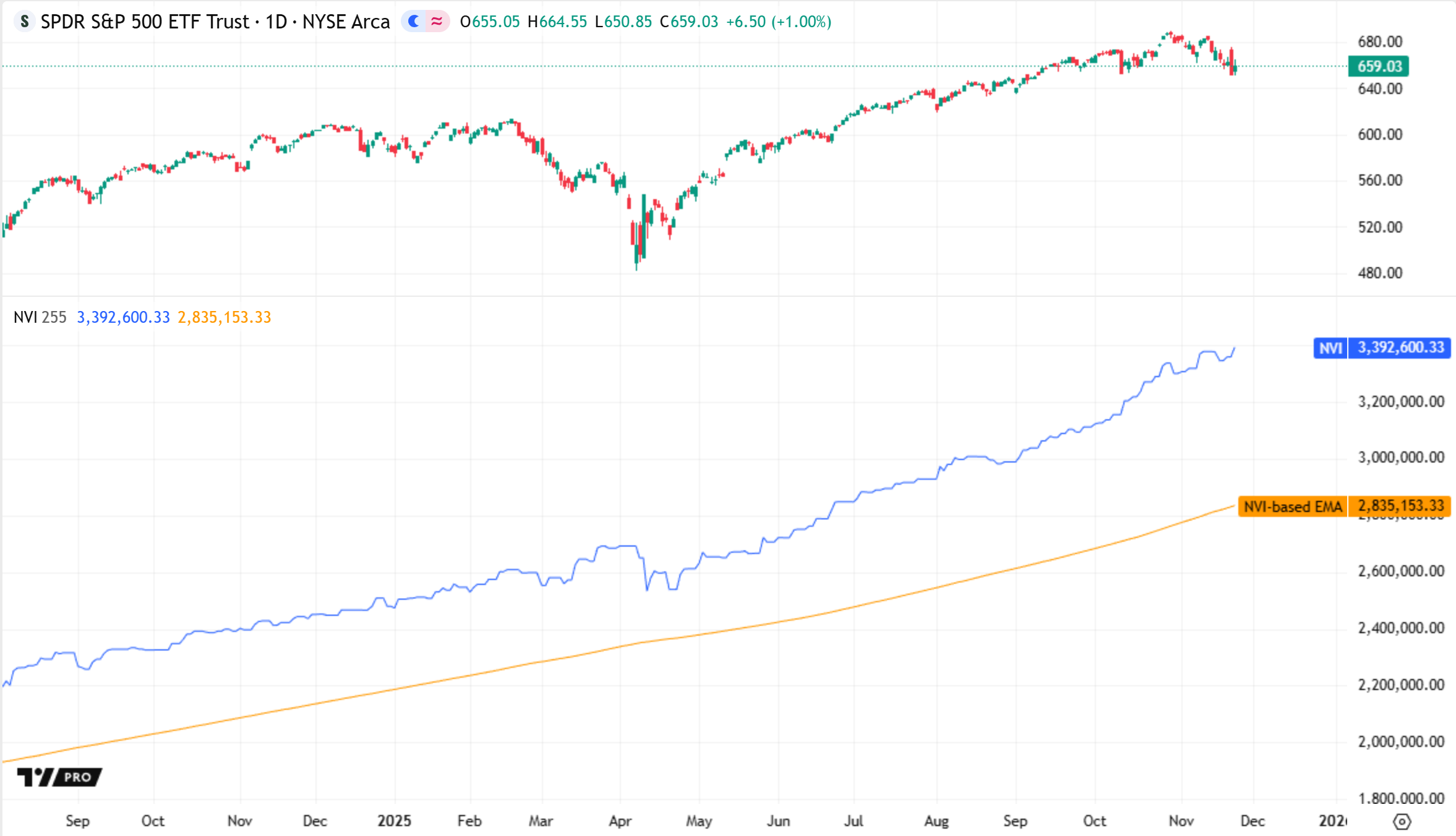
Negative Volume Index (NVI), adalah dicipta oleh Paul L. Dysart Jr. pada tahun 1930an dan diadaptasi oleh Norman G. Fosback pada tahun 1970an, adalah penunjuk trend yang mengumpulkan peratusan perubahan harga dari hanya bar-bar di mana volum berkurang dan pada waktu yang sama mengabaikan perubahan dari bar-bar di mana volum meningkat.
Logik di sebalik NVI dan rakannya, Positive Volume Index (PVI), adalah berdasarkan kepada anggapan bahawa kebanyakan peserta pasaran berdagang semasa tempoh volum tinggi, manakala pelabur lebih termaklum yang lebih rendah bilangannya — kadang-kala dipanggil sebagai "smart money" — adalah lebih aktif semasa tempoh volum rendah.
Pedagang selalunya menganalisa NVI, bersama-sama moving average, pada indeks pasaran untuk mengenal pasti trend asas berdasarkan kepada pergerakan harga yang terjadi semasa volum berkurangan.
Pengiraan
NVI asal Paul Dysart adalah satu penunjuk untuk aktiviti pasaran meluas. Ia mengumpulkan pergerakan kehadapan bersih pasaran pada hari-hari di mana volum berkurang relatif kepada hari sebelumnya. Norman Fosback mengadaptasi konsep ini untuk menggunakan Negative Volume Index kepada mana-mana indeks pasaran dengan data volum. Sebaliknya menggunakan kenaikan dan penurunan, versi Fosback untuk NVI adalah mengumpulkan peratus perubahan dalam harga. Pengiraannnya adalah seperti berikut:
- Tetapkan nilai awal NVI. Nilai menjelaskan skala NVI, tetapi ia tidak mempengaruhi gelagat penunjuk. Nilai-nilai awal paling biasa adalah 1000, 100 dan 1. Penunjuk ini menggunakan 1000.
- Jika volum pada bar semasa adalah kurang daripada bar sebelum, tambah peratusan perubahan semasa dalam harga tutup kepada nilai NVI sebelum.
- Jika volum pada bar semasa adalah lebih besar atau sama dengan bar sebelum, jangan tambahkan peratusan perubahan bar kepada NVI.
Keputusan adalah siri kumulatif yang mengemas kini hanya pada bar-bar volum lebih rendah, memberikan cerapan potensi kepada bagaimana kelakuan pasaran apabila aktiviti dagangan menurun. Fosback memperoleh isyarat dagangan dengan membandingkan NVI kepada moving average 1 tahun. NVI berada pada atas purata mencadangkan kemungkinan trend bulis dalam pasaran dan nilai di bawah purata mencadangkan sebaliknya.
NVI secara amnya bertujuan untuk menganalisa aktiviti pasaran pada indeks pasaran utama, tetapi anda boleh menggunakan penunjuk ini pada mana-mana carta yang mempunyai data volum.
Input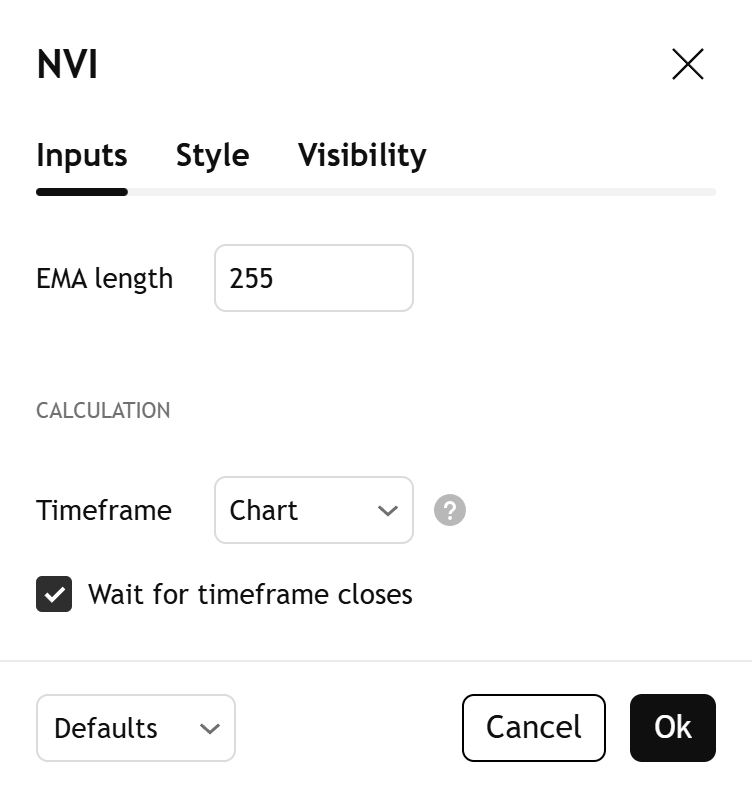
Panjang EMA
Panjang untuk faktor pelicinan (smoothing factor) untuk exponential moving average (EMA) berasaskan NVI . Lalai adalah 255, yang sepadan kepada hampir satu tahun pada carta ekuiti harian.
Rangka masa
Menetapkan rangka masa yang digunakan penunjuk untuk pengiraannya. Kotak semak "Tunggu untuk rangka masa menutup" di bawah menentukan sama ada penunjuk menunjukkan hasil hanya apabila bar pada rangka masa tertentu menutup. Lihat artikel Leverajkan analisis berbilang rangka masa untuk mempelajari lebih banyak.